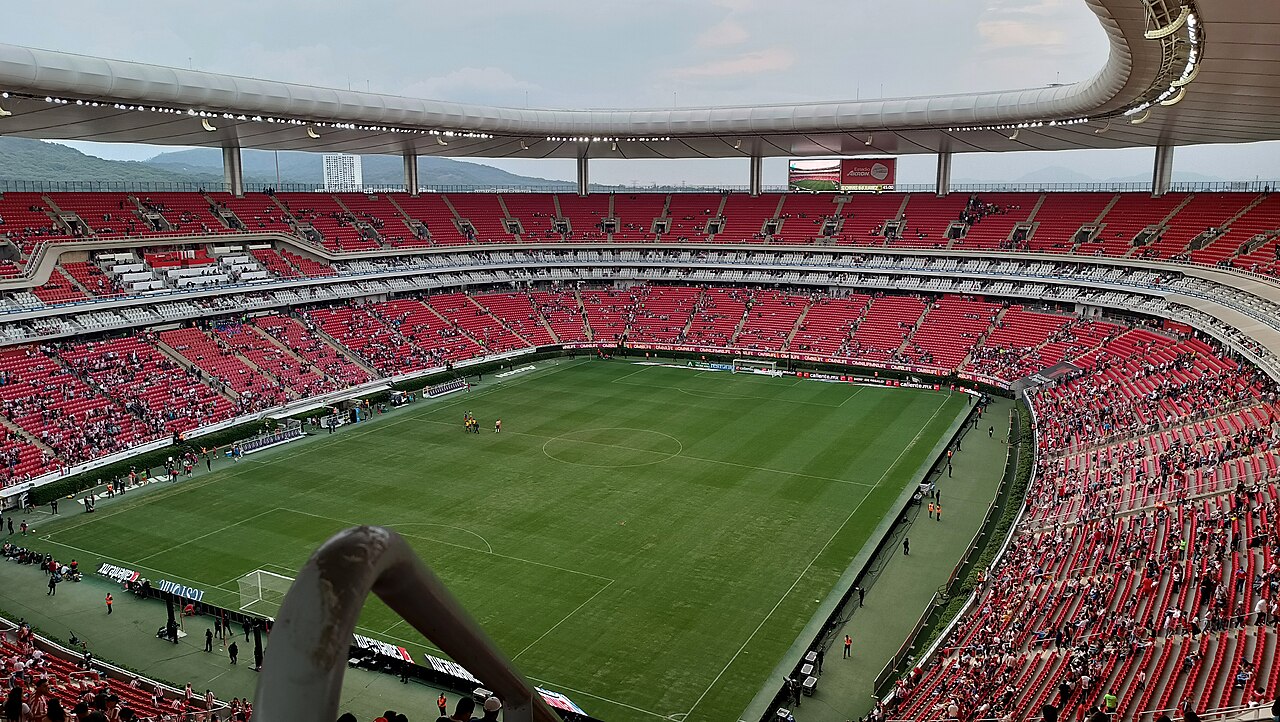
Estadio Akron, officially renamed “Estadio Guadalajara” during FIFA World Cup 2026, is one of Mexico’s most modern and visually striking football stadiums. It is home to Club Deportivo Guadalajara (Chivas) and will be one of the key Mexican venues in the tournament.
🪑 Seating Capacity
- Official capacity: ~49,813 – 49,850 seats (Wikipedia)
- One of the smallest stadiums in the World Cup 2026 lineup
- Designed as a compact bowl stadium, ensuring strong acoustics and atmosphere
- Built on elevated ground, giving it a “floating stadium” feel
👉 Insight: Despite being under 50,000 seats, it is considered one of the loudest stadiums in Mexico per seat density
⚽ FIFA World Cup 2026 Matches at Estadio Akron
- Total matches: 4 games (Squawka | EN)
- All matches are group-stage fixtures
- ❌ No knockout matches hosted here
Example fixtures include:
- Mexico vs South Korea (home highlight match)
- South Korea vs Czech Republic
- Colombia vs DR Congo
- Uruguay vs Spain (Squawka | EN)
👉 Insight: It is a pure group-stage atmosphere stadium, meaning constant international fan rotations.
🏟️ Unique Features of Estadio Akron
- 🏔️ Built with a volcanic-inspired design (inspired by Jalisco landscape)
- 🌿 Located near natural green zones and elevated terrain
- 🏟️ Designed by Populous (world-famous stadium architects)
- 🧊 “Flying saucer” / crater-style roof structure
- ⚽ Home of Chivas Guadalajara, one of Mexico’s biggest clubs
- 🎭 Known for strong visual identity and modern architecture
👉 Insight: Many fans call it a “football temple in a crater” because of its shape and elevation.
🏗️ FIFA World Cup 2026 Stadium Preparations
For the World Cup, the stadium undergoes FIFA-standard adjustments:
- Temporary branding change → Estadio Guadalajara
- Pitch upgrades to FIFA hybrid grass standards
- Expanded broadcast + VAR infrastructure
- Improved fan security and perimeter control
- Transport + shuttle enhancements in Zapopan area
- Crowd flow redesign for high international attendance
👉 Insight: Unlike older Mexican stadiums, Akron requires less structural change because it was built modern (2010)
💡 Interesting Facts About Estadio Akron
- Opened in 2010
- Originally named Estadio Omnilife
- Hosted FIFA U-17 World Cup matches (2011)
- Hosted Pan American Games events (2011)
- Hosted international club matches like Chivas vs Manchester United
- Designed to represent modern Mexican football identity
- Has also hosted concerts and boxing events
👉 Fun insight: It is one of the few stadiums in the world that feels like a stadium + landscape sculpture combined
🎉 Fan Experience at Estadio Akron
Atmosphere
- Extremely passionate Chivas fan base
- Loud, rhythmic chanting culture
- Strong home advantage feeling even for neutral games
Inside experience
- Very steep stands → close-to-pitch feel
- Excellent visibility from most seats
- Intense acoustics due to enclosed bowl design
Crowd vibe
- Latin-American style energy (flags, drums, chants)
- Very colorful fan sections during Mexico matches
👉 Insight: This stadium is built for emotion, not just viewing
🚆 Transportation and Accessibility
Location
- Located in Zapopan (Greater Guadalajara)
- About 30–40 minutes from city center
Best transport options
- 🚌 Mi Macro Periférico (BRT system) → key FIFA transport route
- 🚖 Uber / DiDi (common but heavy surge on match days)
- 🚗 Limited parking (expected strict FIFA restrictions)
- ✈️ Guadalajara International Airport ~30 km away
FIFA 2026 reality
- Expect heavy road closures
- Strong reliance on public transit + shuttles
- Traffic congestion before and after matches
👉 Insight: The stadium is slightly outside central Guadalajara, so FIFA will push a transit-first operation model
🌍 Why Estadio Akron is Important for FIFA World Cup 2026
1. Mexico’s modern football identity
It represents the new generation of Mexican stadium design, beyond historic venues like Estadio Azteca.
2. Balanced tournament structure
It offers a contrast to massive US stadiums:
- Smaller capacity
- Higher atmosphere density
- More intimate football experience
3. Showcase venue for Latin America
It highlights:
- Architecture
- Culture
- Fan passion
- Regional football strength
4. Global attention on Guadalajara
The city becomes a key football destination alongside Mexico City and Monterrey.